
As many of you have seen, I have been participating in the 2017 “Food in Jars” Mastery Challenge. For each month this year, cookbook author Marisa McClellan selected a category for participants and provided tips, podcasts, recipes, and more about that category to the participants.
So far this year, I have participated in every single month, sometimes on the last day, but I got it done! But when we got to August, I just kind of missed it. The category for August was low-temperature pasteurization.
Low-Temperature Pasteurization
From what I read about this, the short version seems to be that it allows you to water bath things (mostly pickled) at a lower temperature for a longer period of time and results in a crispier pickle. It uses equipment like a steam canner and/or immersion cooker/circulator, neither of which I own at this time.
Homemade Yogurt
I have been wanting to make some homemade yogurt in my Instant Pot. At one point I asked our Facebook group if this qualified for the low-temperature pasteurization category and the consensus seemed to be no. Anyway – I skipped the August challenge. I am kind of disappointed that I did, but … life goes on!
What I DID do in August was:
Zesty Peach BBQ Sauce
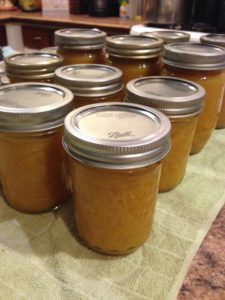
I made a double batch of Zesty Peach BBQ Sauce. I followed the Fresh Preserving recipe except I used 2 jalapenos for the heat instead of red pepper flakes. Safety gurus don’t worry, I used that much less sweet pepper so it’s all good. The peaches I bought came in a 15-pound box and I only used 6 pounds for my sauce, so my husband started a batch of peach raspberry wine with the rest! He used raspberries from our freezer from our patch!
Garden Zucchini Relish and Dill Pickles
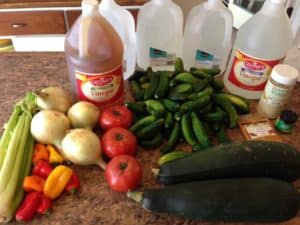
It was time for a bit of pickling, and I made a batch of garden zucchini relish and a batch of dill pickles.
I Won My First Blue Ribbon (Actually Three!)
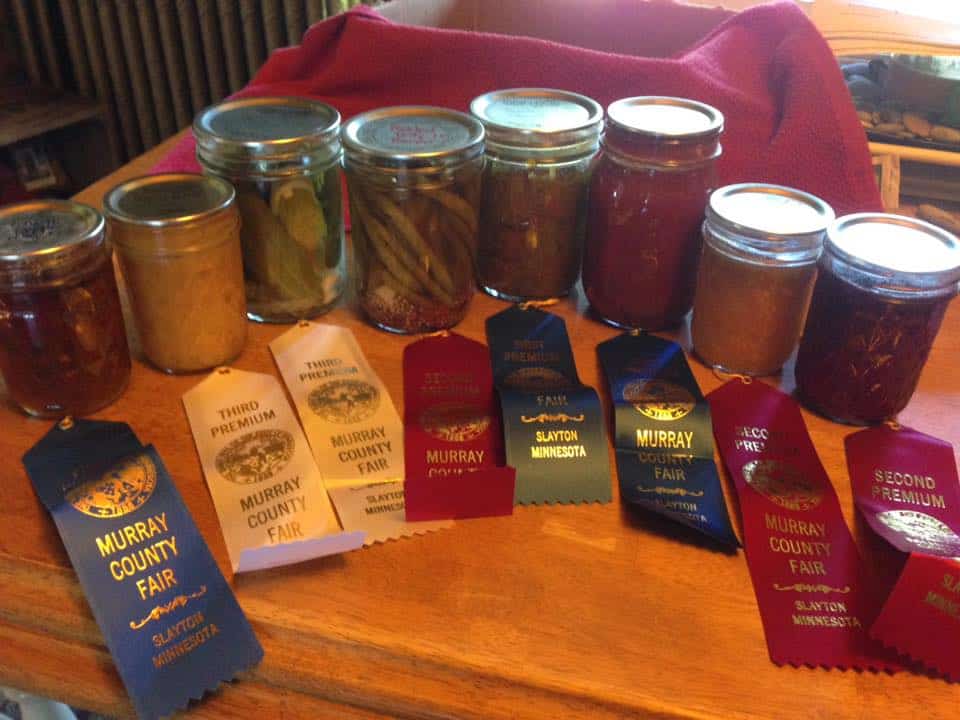
I entered 9 jars of “Food in Jars” at the Murray County Fair and brought home 8 ribbons! My goal for this year was a blue ribbon, so I was excited by the outcome! I got THREE blue ribbons! The new goal for next year will be the coveted (Best in Class) purple ribbon!
Left to right: Confetti Pepper Jelly, Zesty Peach BBQ Sauce, Dill Pickles, Spicy Dilly Beans, Garden/Zucchini Relish, Ketchup, Orange Marmalade, and Raspberry Jam. Not pictured is my entry for Low-Sugar Strawberry Jam, which didn’t get a ribbon because it has “poor eye appeal” because my “fruit is floating.” It gives me something to do better next time, I suppose.
So, here’s to next year’s fair. Let’s pack the pickles tighter, make the fruit not float, and get one of those coveted fancy purple ribbons. And to next month’s (which is this month already) September challenge for fruit butter.
Onward and upward, my friends! Tell me about your blue ribbons in the comments below!
For more blog posts like this one, click here.