
From the outside, a soap business can look pretty simple.
You see a finished bar of soap, maybe a few photos, a product listing, and a package that arrives at your door.
But behind each of those products is a whole series of steps, some creative, some logistical, and some that are just part of keeping everything running.
And since this is something I’m often asked about, I thought it would be fun to share a little bit of what actually goes on behind the scenes.
It Starts Long Before Anything Is Made
Before I ever make a batch of soap, there’s quite a bit happening in the background.
That includes researching and ordering supplies, keeping track of what I already have on hand, and making sure everything is used within the appropriate timeframe. Ingredients like oils, fragrances, and fresh goat milk all have a shelf life (even once it’s frozen), so staying organized matters more than people might expect.
I also spend time planning ahead – thinking about seasons, upcoming collections, and when different products will need to be made and ready.
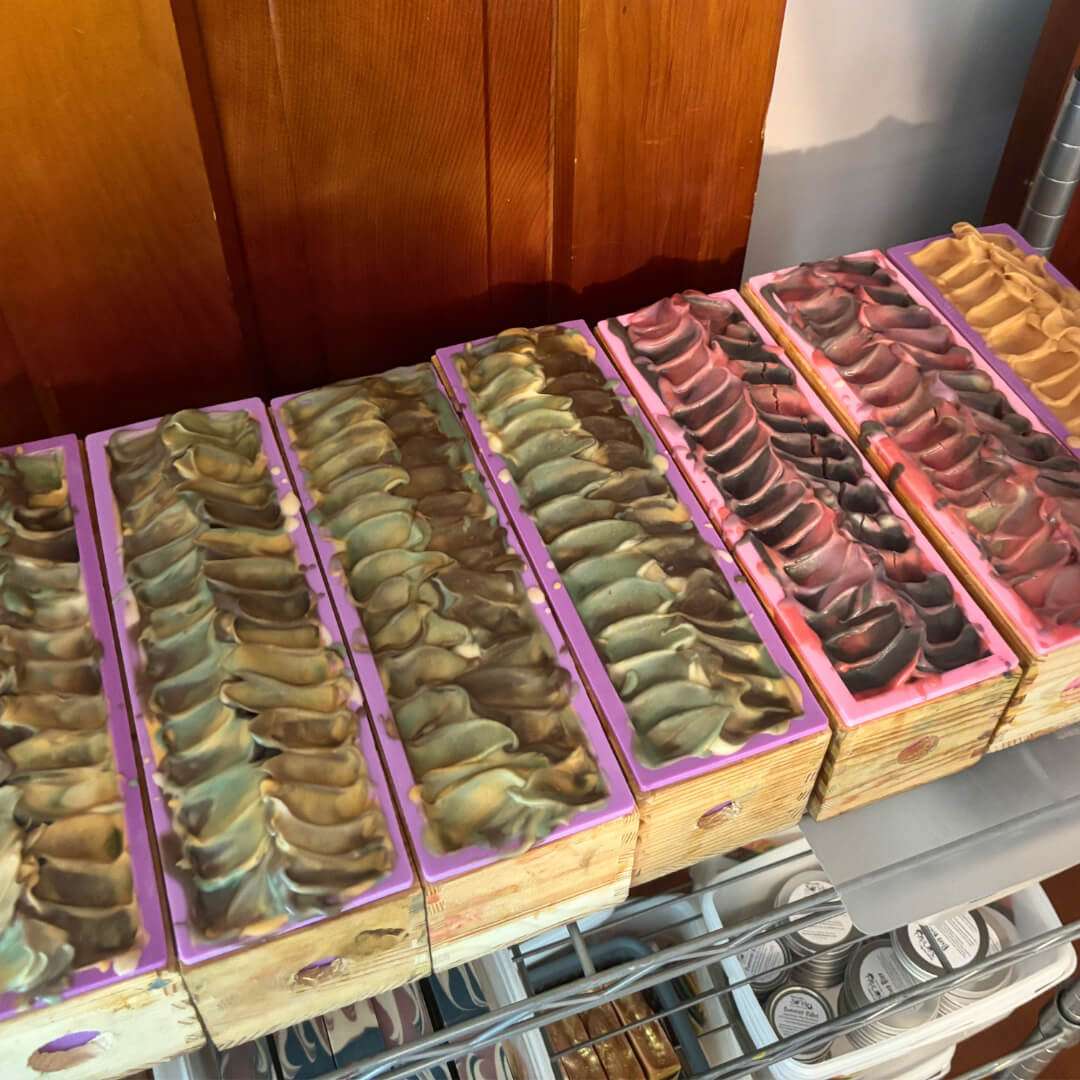
Because once something is made, it’s not immediately ready to sell. Cold process soap needs 4-6 weeks to cure (and I try to be pretty strict on the 6 week side of things), so the planning piece is important to make sure everything lines up.
Coordinating With Local Suppliers
One of the parts of my business that matters most to me is sourcing locally whenever I can.
That means coordinating with local farmers for fresh goat milk and scheduling pickup times that work for both of us. It also means connecting with a local beeswax and honey supplier for certain products.
These aren’t just quick online orders—they’re real relationships, conversations, and scheduling.
And it’s something I really value, even though it adds an extra layer to the process.
Finding Time (and Space) to Actually Make Products
One of the realities of my business right now is that I don’t have a dedicated workshop.
Everything is made in our kitchen.
So part of the behind-the-scenes work is simply figuring out when I can make products.
That means working around our schedule, making sure I have enough uninterrupted time for a making session, and sometimes even paying attention to the weather so I can open windows and doors while I’m working.
There’s a bit of strategy involved in choosing the right days and times for production, something most people probably don’t think about.
Maybe someday I’ll have my very own second kitchen, but for now we make it work!
The Making Process
Once everything is ready, the actual making of the products begins.
That includes soap, but also goat milk lotion, body butter, tallow balm, lotion bars, lip butter, and more.
Each product has its own process, timing, and steps. And while this is the part most people imagine when they think about a handmade business, it’s only one piece of the overall picture.
For example – after the soap is poured, it sits for a couple of days before it can be cut into bars. From there, it continues curing before it’s ready to be used or sold.
The Not-So-Glamorous Parts
After making comes one of the less exciting—but very necessary—steps:
Cleaning.
There are always dishes. Tools. Containers. Surfaces.
It’s part of the process – every single time.
Then there’s labeling. Each product needs to be properly labeled, which means designing, printing, and applying those labels carefully.
It’s detailed work, and it takes time.
Getting Products Ready to Sell
Once the products are made and labeled, they still aren’t quite ready.
Next comes photography—taking photos that accurately represent the product, editing them, and preparing them for listings.
Then those products need to be added to my website, as well as platforms like Etsy and Faire.
Each listing includes descriptions, details, and information that helps customers understand what they’re purchasing.
And then comes the promotion—sharing those products through social media, email, and other channels. I’m most active on Facebook and Instagram!
Orders, Packaging, and Customer Care
When orders come in, the process continues.
Each order is carefully packaged and shipped out. And after that, there’s often follow-up—making sure everything arrived safely and that customers are happy with what they received.
If there are any issues, I handle those as well.
Customer experience matters just as much as the product itself.
Custom Orders and Additional Layers
Custom orders add another layer to everything.
They often involve additional communication, planning, and sometimes ordering specific supplies that I don’t already have on hand.
There’s also a timeline to coordinate—making sure everything is completed and delivered when it’s needed.
It’s a more personalized process, and it requires a bit more flexibility.
It’s a Lot of Small Pieces That Add Up
When you look at any one part of this process, it might not seem like much.
But when you put it all together—planning, sourcing, making, cleaning, labeling, photographing, listing, promoting, packaging, and communicating—it adds up quickly.
And that’s the part people don’t always see.
Why I Still Love It
Even with all of those moving pieces, this is something I genuinely enjoy.
I love creating products that people use in their everyday lives. I love the connection to local ingredients. I love the creative side of designing and making each batch.
And I love knowing that something made in my kitchen can end up in someone else’s home.
It’s not always simple.
But it’s meaningful.
And that’s what keeps me coming back to it.
Frequently Asked Questions
Why can’t handcrafted soap be sold immediately after it’s made?
Soap needs time to cure before it is safe, solid, and ready to be used or sold. During the curing process, extra moisture evaporates, resulting in a hard bar that will last a long time. Because of this, production must be planned well in advance around ingredient shelf lives and curing timelines.
How are ingredients like goat milk, honey, and beeswax sourced?
Sourcing is done locally whenever possible, working directly with local farmers and suppliers. This involves building relationships, coordinating schedules, and arranging pickups rather than just placing online orders.
Where are the products made?
Everything is made in a home kitchen. Production days require strategic planning to fit around daily schedules, ensure uninterrupted time, and manage ventilation depending on the weather.
What goes into getting a finished soap bar ready for sale?
After curing, soap requires cleaning up equipment, designing and applying labels, taking product photography, writing descriptions, updating store listings across platforms, and managing social media promotion.
What other handcrafted items are produced besides soap?
In addition to soap bars, the product line includes lotions, body butters, lotion bars, lip balms, and custom orders.